About SLPOA
The Story of Sparta Lake
From the New Jersey Highlands to a year-round lake community — a history rooted in land, water, industry, and the people who chose to build a life here.
Before the Community
The Land Before the Lake
Sparta Lake sits in the New Jersey Highlands — a region of ancient ridges, hardwood forest, and rocky outcrops shaped by glacial forces and deep geological history. The lake occupies a shallow valley on the slopes of Sparta Mountain (also called Edison Mountain), at an elevation of roughly 1,100 to 1,200 feet. Its outflow forms the headwaters of Russia Brook, a tributary that flows southward into the Rockaway River — and ultimately into the reservoir system that supplies Jersey City.
Before European settlement in the eighteenth century, the Lenape people inhabited this landscape of hills, streams, forests, and lowland wetlands. Their presence in the broader Sussex County region is part of the pre-colonial history of this area, though specific documentation about the Sparta Mountain area should be verified against credible local historical sources before being stated as fact.
The natural character of the area — mixed oak and hardwood forest, mountain laurel, hemlock, wetland edges, and the valley stream — is still visible today. Wildlife common to the Highlands remains a presence: white-tailed deer, wild turkey, black bear, fox. The lake itself is a habitat for bass, panfish, turtles, and waterfowl. The surrounding watershed, largely forested and low-density residential, has helped maintain the lake's water quality across generations.
Sparta Mountain / Highlands terrain
The Highlands landscape surrounding Sparta Lake, looking toward Edison Mountain. Photo placeholder — contact SLPOA to contribute historical imagery.
Regional History
Sparta's Industrial Landscape
Long before Sparta Lake became known primarily as a residential community, the surrounding region was shaped by iron, zinc, limestone, roads, rail, quarrying, and the broader economy of northern New Jersey.
Sparta Township was incorporated in 1845. Its early history reflects the extractive industries that defined the New Jersey Highlands in the eighteenth and nineteenth centuries — mining operations that drew labor, capital, and infrastructure into the area's hills and valleys. The Horseshoe Mine on Sparta Mountain, opened in 1772, supplied ore to forges during the Revolutionary era. Iron mining and forging activity in the broader area left its mark on the landscape and on local place names.
These industries did not directly create Sparta Lake as a community, but they shaped the roads, settlement patterns, and regional identity that made the area accessible to later development. The connection between Sparta Lake's history and the broader township history is one of landscape and context, not always of direct cause.
"Long before Sparta Lake became known primarily as a residential lake community, the surrounding region was shaped by iron, zinc, limestone, roads, rail, quarrying, and the changing economy of northern New Jersey."
Edison's Mountain
Starting in 1889, Thomas Edison invested approximately $3.5 million in an iron ore mining and milling operation on Sparta Mountain — one of the largest industrial ventures of his career.
By 1900, the venture had failed, unable to compete with richer ore sources in the Midwest. Edison later opened the Limecrest limestone quarry near Sparta in 1919 to recover his losses.
A monument on Edison Road commemorates his work on Sparta Mountain. The National Park Service notes Edison spent much of the 1890s on ore mining and processing in the Ogdensburg/Sparta area.
The Lake Community
The Rise of Sparta Lake
By the late nineteenth and early twentieth centuries, Sparta Township had begun to attract visitors from New York and nearby cities who came by train seeking fresh mountain air and natural scenery. Early tourism centered on places like Sparta Glen, a wooded gorge at the base of Sparta Mountain. This wave of leisure-seeking set the stage for the lake community era.
The 1920s brought a boom in artificial lake communities across the New Jersey Highlands. Lake Mohawk — the large, nationally known lake development in Sparta — was created between 1926 and 1928. Around the same time, smaller lake communities were being developed throughout the township for summer recreation. Sparta Lake was one of them.
Developers acquired land in the Glen Road and Edison Mountain area and constructed a dam across a local stream — the headwaters of Russia Brook — to create Sparta Lake. Lots were laid out, roads were cut, and early cottages began to appear on the slopes above the water. The main access road, Glen Road (County Route 620), runs along the southeastern edge of the community. From it, a series of private lanes — Lincoln Drive, Dandelion Road, Hamilton Road, and others — loop through the neighborhood in a pattern that still reflects the original 1920s layout.
When lots were sold, the lake itself, the dam, and shared community land — including the beach area — were deeded to the Association to be held in common for the benefit of all property owners. This ownership model was standard for private lake communities in New Jersey.
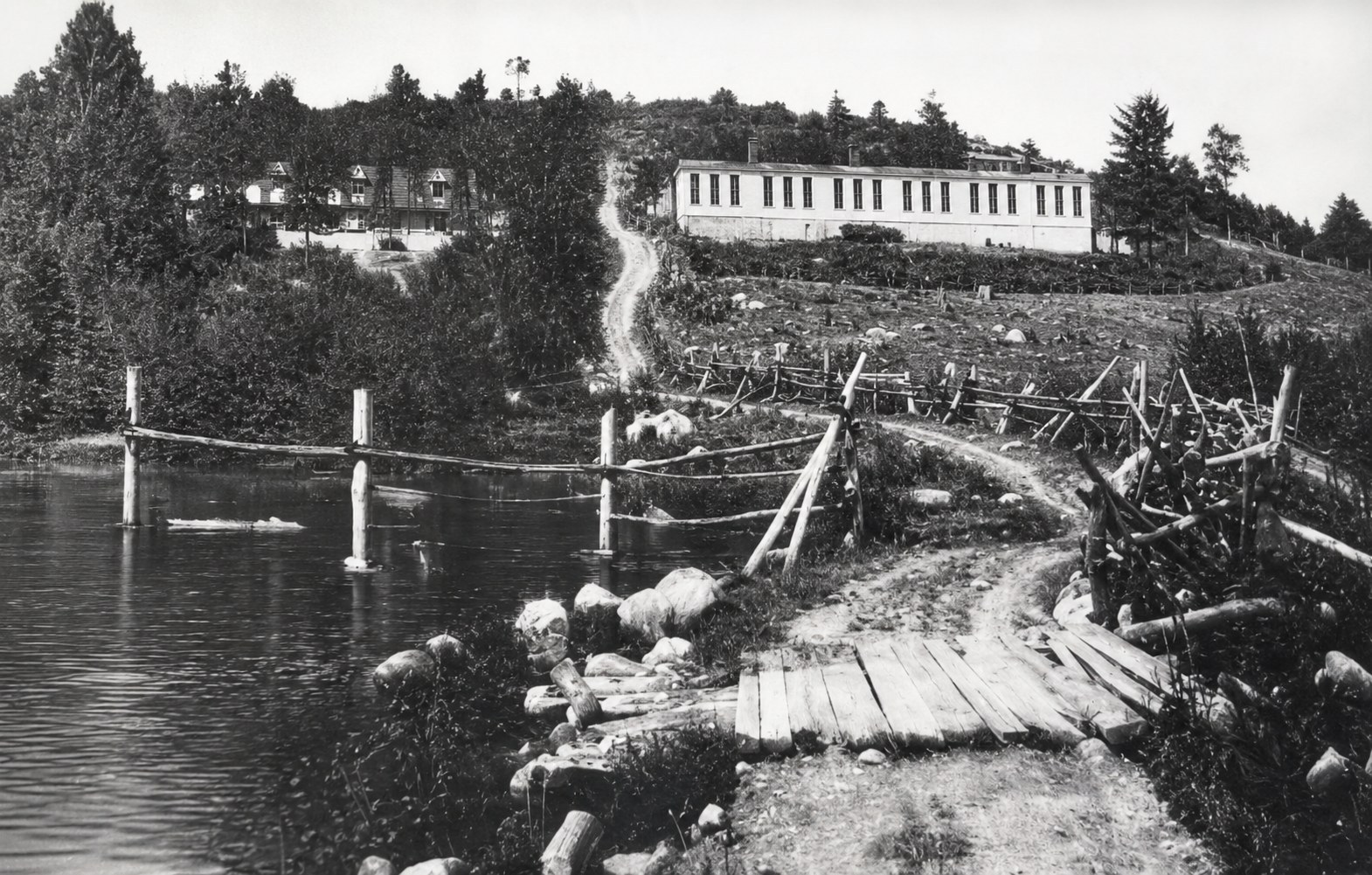
Early Sparta Lake, circa 1920s–1940s. AI-enhanced image; original photographer unknown.
Questions the Board is researching
- Who originally developed the Sparta Lake community — were there named individuals, a land company, or a development firm?
- When were the first lots sold, and were early deeds or subdivision plats recorded at the Sussex County Clerk?
- When was the dam and lake structure formally created?
- When did SLPOA formally organize, and what does "Since 1928" specifically refer to?
- Were early homes seasonal cottages, full-time residences, or both?
- What was the large white building visible in the historical photograph — community hall, lodge, or something else?
- Are there old plats, deeds, advertisements, meeting records, or newsletters that document early community life?
The Board is reaching out to the Sparta Historical Society, the Sparta Township Records Department, and the Sussex County Clerk's office to pursue answers. Residents with historical materials, deeds, or family memories are encouraged to share them.
A Continuing Story
Since 1928
Since 1928, Sparta Lake has depended on residents working together to preserve the shared character of the community. Across generations, the practical responsibilities have changed — maintaining a dam that was once new, navigating modern environmental regulation, converting seasonal cottages into year-round homes — but the core idea has remained constant: the lake only works when the community takes care of it together.
Early seasonal life at the lake was centered on summer recreation. Families swam, fished, paddled rowboats, and gathered at the beach. Children created their own trails through the surrounding forest. In winter, the frozen lake offered ice skating and, by community legend, toboggan runs that carried riders from the top of Edison Mountain all the way down to the dam.
Over time, most of the original small summer cottages were expanded, renovated, or replaced with modern homes. The community transitioned from a seasonal colony into a year-round neighborhood. Through all of that, the Association has maintained continuity: coordinating stewardship, communicating with residents, managing shared assets, and keeping records that outlast any single board.
"The lake only works when the community takes care of it together."
That responsibility has not always been simple. Dam safety requirements — stricter with each decade — have required engineering studies, advocacy, and long-term planning. Environmental regulations have shaped what can and cannot happen on the shoreline and in the watershed. The Association has navigated these challenges as a volunteer organization, with residents giving time and attention alongside their dues.
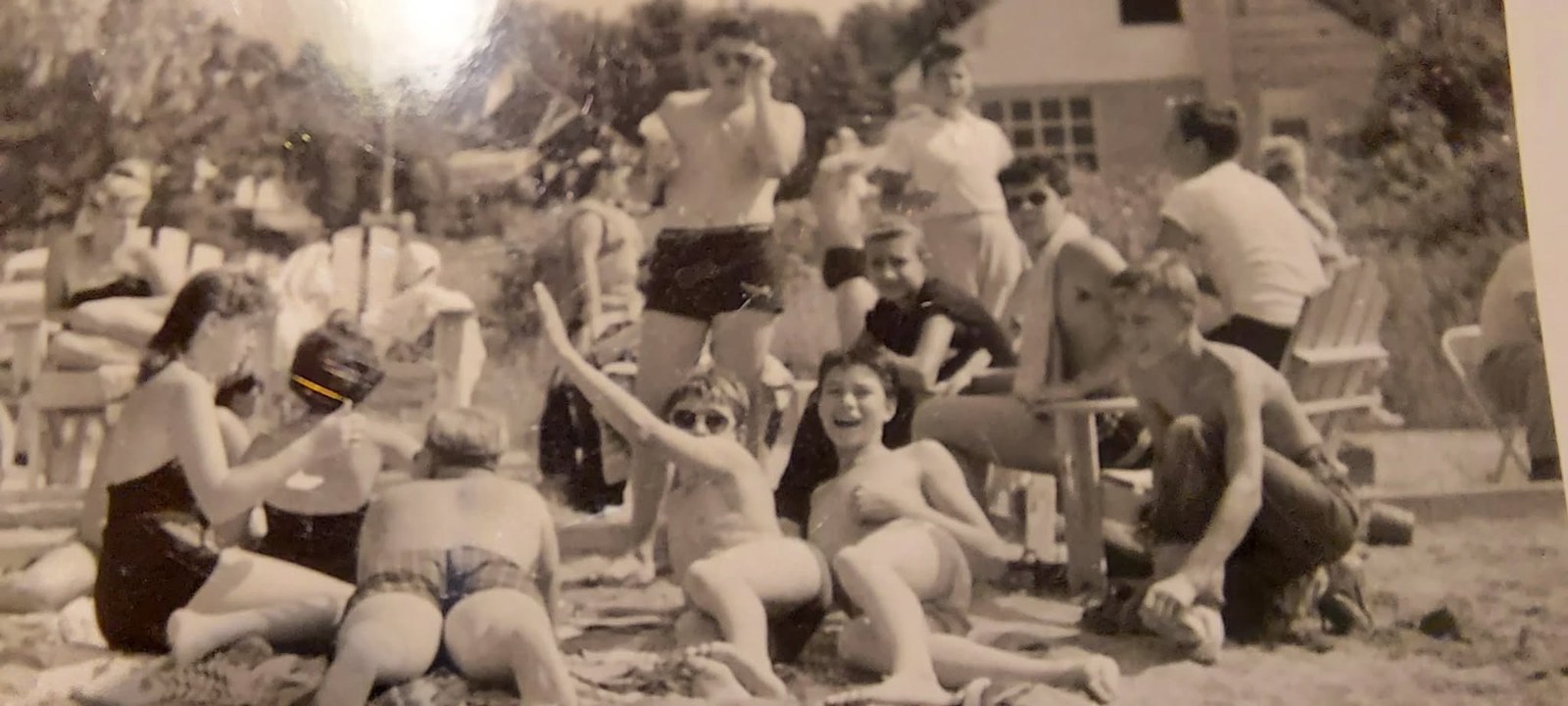
Summer life at Sparta Lake, circa 1956.
Community Memory
Life Around the Lake
The history of Sparta Lake is not only the history of its development or its dam — it is the accumulated story of the people who have lived here, season after season, for nearly a century.
Longtime residents remember the texture of lake life: the smell of the water in summer heat, the sound of children at the beach, the way the ice looks in January, the annual rhythms of opening and closing up. These memories are part of the community's archive too, even when they are not written down.
SLPOA is working to gather more of that history — through old photographs, early maps, meeting notices, resident stories, and any other materials that connect to the community's past. A community archive, built over time from resident contributions, could eventually provide answers to the questions the Board is still researching and preserve the stories that no document has yet captured.
Materials the community is seeking
The Present
Stewardship as the Modern Chapter
Today, SLPOA's work is less about creating a lake community and more about preserving one. Lake health, dam maintenance, common area upkeep, dues, documents, resident communication, and volunteer participation are the modern continuation of the same responsibility residents inherited from earlier generations.
That line gives the history of Sparta Lake a purpose. It connects past to present — not as sentiment, but as a practical argument for why the Association exists, why dues matter, why stewardship guidelines are worth following, and why resident participation makes a real difference.
Every generation of Sparta Lake residents has handed the lake to the next one in some condition. That handoff is ongoing. The Association continues to serve the community as it has since 1928 — through volunteer leadership, shared responsibility, and care for the place residents have chosen to call home.
Help Preserve Sparta Lake History
Do you have old photos, maps, beach tags, newsletters, meeting notices, deeds, advertisements, or stories connected to Sparta Lake? SLPOA is collecting historical materials for review and possible inclusion in the community archive. Even a single photograph or a remembered detail can help fill in the record.
A Community With Deep Roots
Sparta Lake Through the Years
Sparta Lake has grown from an early lake community into a year-round neighborhood shaped by generations of residents, volunteers, and property owners. Since 1928, the community has depended on shared responsibility: caring for the lake, maintaining common areas, preserving records, and keeping residents informed.
The Association is working to preserve more of that story through old photos, maps, meeting records, resident memories, and historical materials connected to Sparta Lake.
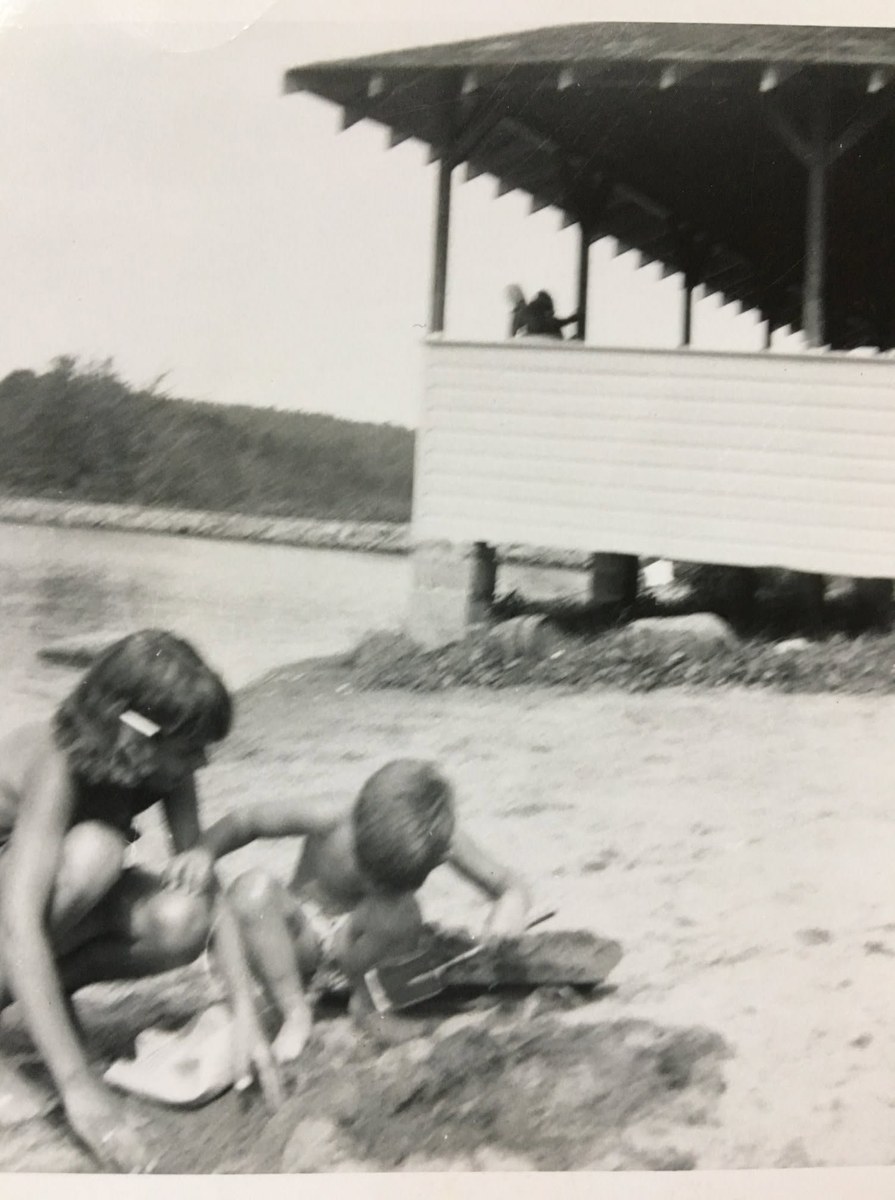 C. 1955 Credit: T.Linardi / Facebook.
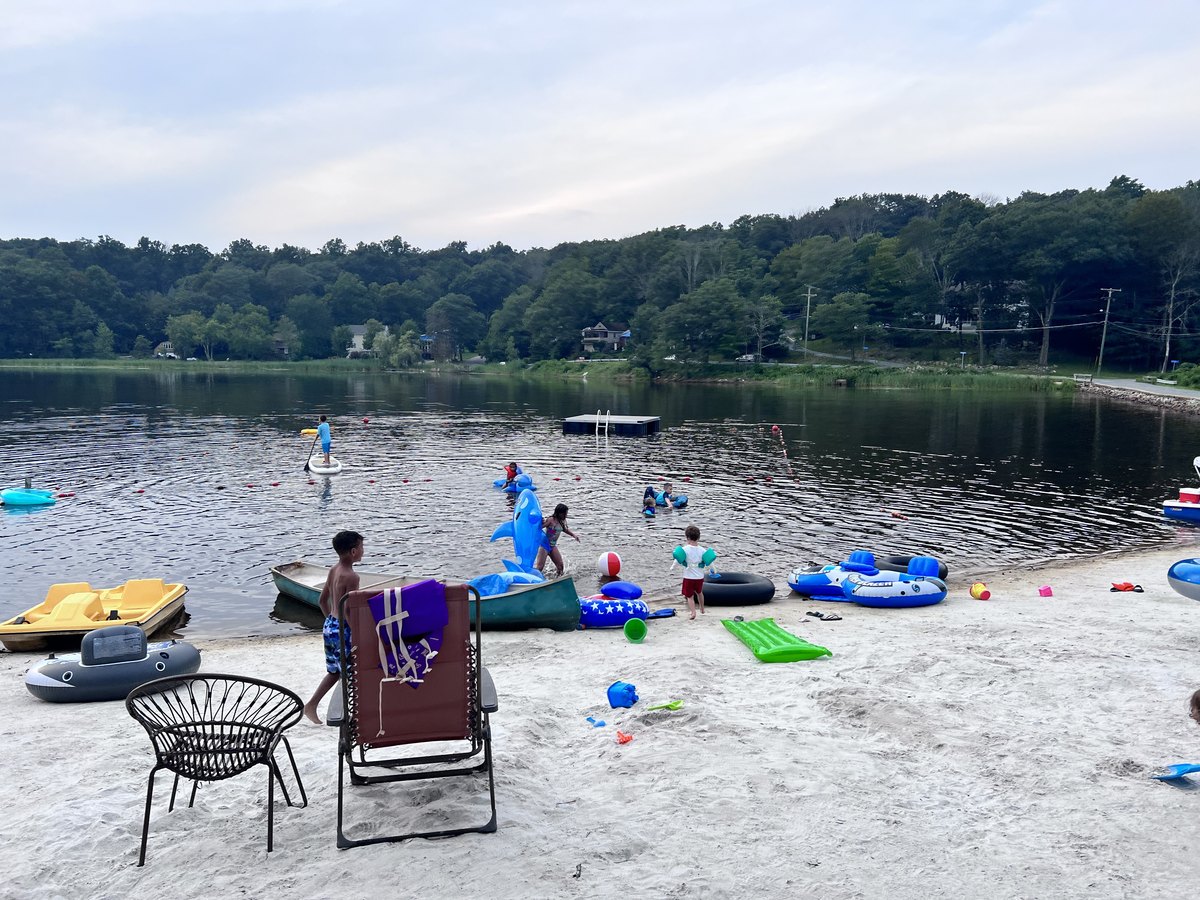 Credit: T. Deretti.